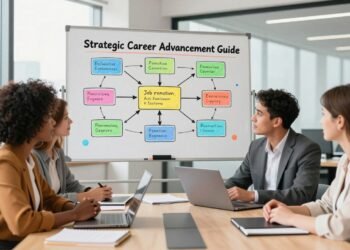

What if the traditional career ladder is no longer the only path to success? The world of work is changing faster than ever. For those starting out, this shift creates both exciting opportunities and new challenges.
The average person will spend roughly one-third of their life, or about 90,000 hours, at work. This makes strategic planning for your professional life a critical priority. It’s no longer just about climbing a corporate hierarchy.
Millennials and Gen Z are redefining success. They often prioritize purpose, continuous learning, and flexibility over rigid job titles. This guide is designed to help you navigate this new landscape.
We will address unique modern hurdles. These include AI’s impact on jobs and the need for highly adaptable skills. This comprehensive resource offers actionable strategies and research-backed insights.
Our goal is to empower you to build a personalized and agile journey. You will learn to create a path that truly reflects your evolving interests and aspirations for a fulfilling today and tomorrow.
Key Takeaways
- The modern workplace demands a new approach to professional growth beyond the traditional corporate ladder.
- Strategic planning is essential, given the significant amount of time dedicated to one’s work life.
- Younger generations are prioritizing purpose, flexibility, and ongoing skill development.
- Adaptability is crucial to navigate challenges like technological disruption and changing job markets.
- This guide provides practical, actionable strategies to build a personalized and successful career path.
Understanding Career Development for Young Professionals
Early professional achievement is no longer a linear path defined by a single company’s hierarchy. Modern metrics now include personal fulfillment, purpose, and impact alongside traditional markers.
This shift requires a fresh perspective on building a strong beginning.
Defining Early Career Success
What does a successful start look like today? It’s about building a versatile toolkit. True career success now balances mastery, meaningful contribution, and well-being.
This holistic approach sets the stage for long-term satisfaction and growth.
The Role of Apprenticeship in Building Foundations
Decades of research provide a useful framework. Forty years ago, HBS professors identified four performance stages, starting with the Apprentice phase.
This initial stage is about learning core functions and earning trust through demonstrated competence.
The context has changed dramatically. Professionals now work for many more organizations throughout their lives compared to previous generations.
This means the apprentice experience is less about learning one specific company. It’s about mastering universal skills like teamwork and cultural adaptation.
These foundational abilities are portable. They create a robust platform for all future growth, regardless of where your journey takes you.
This varied early experience fosters rapid maturity and a broad skill set.
Modern Apprenticeship and Shifting Entry-Level Roles
Today’s college graduates face a fundamentally different job market where routine administrative tasks are increasingly automated. The World Economic Forum reports that 63% of AI applications target repetitive work like data collection and document verification.

This shift creates new challenges but also opens better opportunities. Many traditional first job responsibilities provided limited learning value for professional growth.
Traditional Tasks vs. Meaningful Skill-Building Experiences
While AI handles administrative tasks, humans focus on developing critical competencies. Organizations like Parker-Dewey offer micro-internships with companies like Microsoft.
These short-term, paid assignments help students gain practical work experience. They build communication skills and demonstrate reliability to future employers.
Gallup research shows 40% of college students complete internships. Another 30-35% maintain side gigs while 17% lead startups during their academic years.
These diverse experiences create a more robust foundation than traditional entry-level positions. Students develop cooperation, accountability, and commitment through multiple pathways.
This approach addresses employer demands for work-ready professionals. It transforms the way people build essential skills before entering full-time roles.
Leveraging AI and Emerging Technologies
While headlines warn of AI eliminating entry-level positions, the technology is actually reshaping them into more valuable roles. The initial fear stems from real data showing decreased demand for traditional entry-level talent across multiple industries.
Recruitment firms report clients increasingly seek “work ready” professionals rather than training raw talent. This shift creates both challenges and new possibilities for skill building.
AI’s Impact on Entry-Level Opportunities
Artificial intelligence primarily automates low-value, routine tasks that offered limited developmental value. The World Economic Forum forecasts a net increase of 78 million jobs despite 92 million roles being displaced.
This technological shift mirrors historical patterns where innovation creates more opportunities than it destroys. Early career professionals now face more meaningful challenges than administrative work.
Using AI Tools for Personalized Development
Forward-thinking organizations deploy AI to enhance employee growth rather than replace it. Companies like AceUp provide coaching support through technology, while BetterUp offers virtual coaches.
AI agents help create personalized apprenticeship journey maps incorporating training, projects, and rotational assignments. These tools accelerate skill acquisition and technical competencies.
Preparing for the Technological Shift
Successful professionals view artificial intelligence as a powerful development tool rather than a threat. They focus on building technical skills that complement AI capabilities.
The key lies in developing uniquely human competencies like creativity and critical thinking. This approach turns technological disruption into personal growth opportunities.
Building Personalized Career Ladders and Networks
The rigid corporate ladder of yesterday is giving way to flexible career frameworks that recognize diverse growth patterns. Modern workplaces now value multiple advancement directions beyond traditional upward climbs.

This evolution creates more personalized opportunities for professional advancement. Organizations benefit from adaptable systems that match individual strengths with company needs.
Vertical and Lateral Growth Paths
Traditional progression followed a straight upward path. Think Marketing Assistant to VP of Marketing through sequential promotions.
Today’s approach enables movement in multiple directions. Employees can move upward, sideways, or diagonally within their organization.
This flexibility allows people to build diverse skill sets while contributing to different teams. Lateral moves provide valuable experience without requiring title changes.
Embracing Skills-Based and Internal Mobility Models
Skills-first frameworks focus on capabilities rather than job titles. Employees contribute based on what they can do, not just their position description.
Internal mobility programs help companies retain talented people. Workers gain new experiences without leaving the organization.
Research shows 65% of Gen Z workers prioritize professional growth opportunities. Modern career frameworks meet this demand through continuous learning options.
Project-based assignments let employees work across departments. This builds versatile skills while supporting various company initiatives.
Actionable Strategies for Professional Development
Turning career aspirations into reality hinges on adopting systematic methods for continuous improvement. These practical approaches transform ambition into measurable achievement.
Setting SMART Goals to Guide Your Journey
SMART goals create clear direction for professional growth. They establish specific, measurable targets with realistic timeframes.
This framework helps break large ambitions into manageable steps. Monthly milestones build toward three-year visions systematically.
Establishing a Growth Mindset for Continuous Learning
Stanford psychologist Carol Dweck’s research reveals two distinct mindsets. The growth mindset believes skills develop through effort and learning.
This perspective treats challenges as opportunities rather than threats. A Gallup poll shows 87% of millennials value development as essential to their roles.
Harnessing Mentorship and Coaching for Career Growth
There’s a significant mentorship gap in today’s workplace. Over 80% of Gen Z recognizes mentor importance, but only 52% have these relationships.
Employees with satisfying mentor connections experience more promotions and greater job satisfaction. Approximately 70% of Fortune 500 companies offer structured mentoring programs.
Active pursuit of development opportunities accelerates professional advancement. These include webinars, online courses, and industry-specific programs.
Balancing Work-Life, Mental Health, and Professional Success
Sustainable success requires more than professional achievements alone. Modern professionals prioritize holistic well-being alongside traditional markers of accomplishment.
Creating a Sustainable Work-Life Balance
Research reveals that 85% of respondents consider work-life balance extremely important. This fact reflects a fundamental shift in workplace expectations.
Flexible arrangements are no longer just perks but necessities. Seventy-three percent of Gen Z employees seek permanent alternatives to traditional schedules.
Mental health challenges impact 51% of today’s workforce. These issues directly affect performance and satisfaction in professional life.
Evidence-based strategies include daily exercise and regular breaks from work. Intentional time away from screens restores motivation and improves mood.
Many people prioritize values alignment over compensation. They seek employers whose principles match their socio-political views.
Remote workers must establish clear boundaries between work and personal time. This separation prevents burnout and maintains productivity.
Recognition, respect, and autonomy rank high among worker priorities. Taking time for self-care ensures sustainable performance over the long term.
Conclusion
Building a successful professional path now demands agility and strategic thinking from the very beginning. The traditional linear progression has been replaced by dynamic, personalized journeys.
While technology transforms entry-level roles, it creates approximately 78 million net new opportunities across industries. This evolution requires developing versatile skills through diverse experiences like internships and project-based work.
The most valuable approach combines skills-first development with purpose-driven work. Organizations that prioritize internal mobility and continuous learning will thrive in this new landscape.
View your professional journey as an ongoing process of growth and adaptation. Leverage available resources to create a path aligned with your values and aspirations for lasting fulfillment.
FAQ
What is the best way to start building a strong professional foundation right after college?
The most effective approach is to seek out roles that offer meaningful skill-building experiences, not just routine tasks. Look for organizations with robust training programs or a culture that values mentorship. This early phase is crucial for gaining practical knowledge and establishing good work habits.
How is artificial intelligence changing entry-level jobs and opportunities today?
AI is automating many traditional tasks, which shifts the focus toward roles requiring critical thinking, creativity, and emotional intelligence. This creates new opportunities for those who can leverage AI tools to enhance their productivity and decision-making. Embracing this technological shift is key to staying relevant.
What does a "personalized career ladder" mean for someone in their first job?
It means your growth path isn’t strictly vertical. Instead of just aiming for promotions, focus on lateral moves that build diverse skills. This involves seeking internal mobility within your company, taking on new projects, and continuously learning. This flexible approach often leads to more sustainable and fulfilling long-term success.
How can I set effective goals to guide my professional journey?
Use the SMART framework. Your goals should be Specific, Measurable, Achievable, Relevant, and Time-bound. This method turns vague aspirations into clear, actionable steps. For example, instead of “get better at communication,” a SMART goal would be “complete a public speaking workshop and lead two team presentations within the next quarter.”
Why is maintaining mental health considered critical for professional success?
Your well-being directly impacts your performance, creativity, and ability to handle challenges. A sustainable work-life balance prevents burnout and keeps you energized. Prioritizing mental health is not a distraction from success; it is a fundamental part of achieving and enjoying it over the long term.