
What if the biggest barrier to your company’s growth isn’t market competition, but an internal gap in your team’s capabilities?
The modern American workplace moves fast. New tools and processes emerge constantly. To stay ahead, your people need continuous development. This isn’t just about technical know-how. It’s about fostering a culture where everyone can grow.
Data reveals a clear need. The Deskless Report 2024 found that 56% of managers want more cross-training and upskilling to stay effective. Leaders who ignore this signal risk falling behind.
This guide serves as your roadmap. We’ll explore a proven process for designing a development program. It aligns with core business goals and supports your employees’ career paths.
You’ll learn how to integrate soft skills like communication with technical knowledge. We show how feedback and data analysis measure real impact. The goal is to transform your workplace into an engine for success.
Key Takeaways
- Continuous learning is essential for adapting to today’s evolving job demands.
- Over half of managers report a strong need for more training and upskilling opportunities.
- A successful development program must align directly with organizational goals.
- Combining soft skills development with technical knowledge boosts overall team performance.
- Effective communication and feedback loops are critical for employee growth.
- Measuring the impact of your strategy with data ensures resources are well-spent.
- Leveraging digital tools can create a more dynamic and engaging learning environment.
Introduction to Skill Building Strategies
The foundation of any successful organization lies in its commitment to systematically improving its people’s abilities. This proactive approach is essential for navigating the constant changes in the modern business landscape.
Defining Skill Development and Its Importance
Development refers to the ongoing process of learning and reinforcing abilities. These abilities help employees perform their daily tasks more effectively.
Its importance is clear. The World Economic Forum states 54% of all employees need significant reskilling to stay competitive. This isn’t about occasional training. It’s about ensuring your team can adapt and excel in their roles.
Overview of Best Practices for Building Skills
Effective approaches start with personalized paths. These paths align with individual career goals and the organization’s needs. Continuous feedback from leaders is crucial. It turns training into real improvements in work performance.
Modern tools make growth efficient. For example, microlearning lets people strengthen critical knowledge in just 3-5 minutes a day. This method supports a culture of ongoing education.
A robust program addresses everyone, from frontline staff to management. Fostering curiosity empowers each employee to own their learning journey. This adaptability drives long-term success.
Understanding the Importance of Skill Development for Growth
Data reveals a powerful truth: companies that prioritize employee growth see dramatic improvements in performance and retention. This commitment to continuous learning is not an optional perk. It is a core driver for both personal advancement and organizational success.
Impact on Personal and Professional Success
For individuals, access to training is a major factor in job satisfaction. A LinkedIn survey found that 94% of employees would stay longer at a company that invests in their career development.
This statistic highlights a key point. When people see a clear path for advancement, they feel valued. This directly fuels their professional success and engagement.
Benefits for Frontline Employees and Leaders
Effective development programs create a ripple effect. Research shows that when employees receive desired training, companies experience a 17% increase in productivity.
Frontline staff gain confidence and reduce errors. They become prepared for future leadership roles. Meanwhile, leaders who champion this growth cultivate a more motivated and adaptable workforce.
Gallup reports that companies with highly engaged teams achieve 21% greater profitability. Aligning learning with business goals builds the agility every modern organization needs.
Exploring Skill Building Strategies in Today’s Workplace
Navigating today’s dynamic job landscape requires a clear understanding of two distinct ability categories: hard technical proficiencies and soft professional talents. Many development programs fail because they don’t address how people learn and apply this knowledge on the job.
Technical Skills vs. Professional (Soft) Skills
Technical abilities are specific to a role or tool. Examples include operating a point-of-sale system or managing digital inventory. These are essential for completing core tasks.
Professional skills, often called soft skills, are transferable. They include communication, time management, and emotional intelligence. A strong employee needs both types for peak performance.
Real-World Examples and Data Insights
Traditional training often fails. Studies show over 70% of content is forgotten within a week when learning is purely lecture-based. This happens due to a lack of hands-on practice.
Managers see the gap. Data reveals 56% want more upskilling opportunities for emerging tools like AI. Frontline staff need this ongoing learning to think quickly and work with diverse teams.
The solution is experiential. Organizations must move beyond passive information. Providing contextual practice transforms knowledge into confident action. Digital tools help employees stay organized, reducing errors during busy shifts.
Designing an Effective Skill Development Program
A truly effective development program moves beyond traditional classroom lectures to embed learning directly into the daily workflow. The focus shifts to practical application and ongoing support.

Practical Implementation and Microlearning Approaches
Microlearning allows employees to strengthen critical knowledge in just 3-5 minutes a day. This makes training fit into the busiest schedules.
Gamification boosts engagement. In Project Faro, a logistics company used gamified simulators. They saw a 32% reduction in operational errors and a 15% jump in customer satisfaction.
Role Modeling, Mentoring, and Continuous Feedback
Role modeling is a powerful form of learning. New hires watch experienced teammates to emulate successful behaviors.
Structured mentoring programs, like those on the Together platform, match mentors and mentees based on goals. This scales development efficiently.
Continuous feedback loops provide real-time coaching. This guides employee improvement without micromanagement. It turns everyday work into a learning opportunity.
Integrating Skill Building with Organizational Goals
Without a clear link to organizational targets, even the best training initiatives can fall short. The most successful programs are those designed to directly support core business objectives.
This alignment ensures every employee’s growth contributes to the company’s mission.
Aligning Skill Building Strategies with Business Objectives
Start by conducting a thorough analysis of your workforce. Identify specific gaps in knowledge that hinder progress toward key goals.
For example, a focus on customer satisfaction might require enhanced communication skills for frontline staff. Engaging stakeholders from management and HR fosters collective ownership of the development process.
This collaborative approach ensures resources are invested in the right areas.
Measuring Impact and Performance Through KPIs
Establish clear key performance indicators to track the effect of your efforts. Metrics might include productivity rates, error reduction, or employee retention.
Data from these KPIs provides tangible proof of how learning influences operational results. Focusing on nurturing existing talent also leads to significant cost savings.
It reduces expenses linked to hiring and onboarding new people. Regular reviews allow for realigning the program as business needs evolve.
Trends and Future Directions in Skill Building Strategies
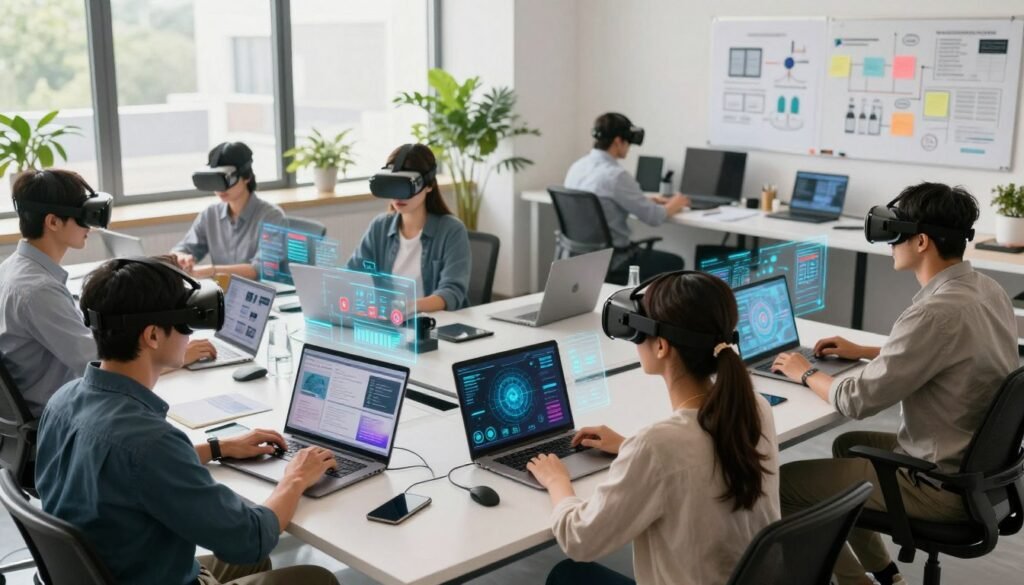
Forward-thinking companies are now leveraging cutting-edge digital platforms to transform how training is delivered and experienced. The shift is toward flexible, on-demand access that supports a dispersed workforce.
Remote learning systems are essential. They give staff access to materials from anywhere, at any time. This flexibility is crucial for today’s dynamic work environments.
Innovative Training Tools and Digital Learning Platforms
Personalization is a major trend. Modern platforms create tailored plans based on individual career paths and existing abilities. A one-size-fits-all approach is no longer effective.
Artificial intelligence powers adaptive simulations. Tools like Game Strategies adjust difficulty in real-time based on user performance. This keeps challenges relevant and engaging.
Data integration is key for measuring impact. New dashboards combine platform analytics with CRM data. They show clear links between learning activities and operational KPIs.
The focus on microlearning continues to grow. Short, focused sessions save time and boost knowledge retention. This is ideal for fast-paced professional settings.
Progressive organizations establish innovation hubs. They allocate dedicated time for passion projects. This reinforces a continuous learning mindset across the company.
Advanced software improves mentoring. Smart algorithms pair mentees with mentors based on specific goals and personality traits. By using these innovative tools, companies ensure their workforce stays agile and ready for new challenges.
Conclusion
Ultimately, sustainable competitive advantage stems from a team that continuously evolves and adapts. Embracing modern approaches like microlearning and digital tools turns a workforce into a powerhouse of skilled professionals.
Aligning development with core business goals and measuring impact through KPIs proves the real return on investment. This data-driven approach ensures resources are focused where they matter most.
Treat continuous learning as a mindset, not just a task. This empowers employees to actively seek growth opportunities. Organizations that prioritize their people’s development see clear improvements in retention and productivity.
Now is the time to take practical steps. Leverage technology to ensure every employee can thrive in today’s digital environment. The right strategy fosters an agile, capable, and future-ready organization.
FAQ
Why is continuous learning so critical for my career today?
In today’s fast-moving work environment, the knowledge needed for many jobs evolves quickly. Committing to ongoing development keeps your abilities sharp and relevant. This proactive approach directly boosts your performance and opens doors to new opportunities, securing your long-term professional success.
What’s the difference between hard and soft skills, and which are more important?
Technical skills, like data analysis or using specific software, are the hard skills required to perform specific tasks. Professional abilities, such as communication, teamwork, and leadership, are the soft skills that help you apply those technical skills effectively. For lasting career growth, a strong combination of both is essential. Employers often seek candidates who excel in both areas.
How can a development program be designed for busy employees?
Effective training respects an employee’s time. Modern programs use microlearning—short, focused lessons that fit into a workday. Blending this with hands-on experiences, mentoring from leaders, and regular feedback creates a practical and supportive learning environment that drives real improvement.
How do company goals connect to individual development plans?
Forward-thinking organizations align learning initiatives with their core business objectives. For example, if a company’s goal is to improve customer satisfaction, the training might focus on communication tools and problem-solving techniques. This ensures that employee growth directly supports the team and the company’s mission, creating a powerful synergy.
Can the impact of training actually be measured?
Yes, measuring impact is key. Organizations track progress using Key Performance Indicators (KPIs) like project completion rates, quality scores, or employee feedback surveys. Analyzing this data shows how development efforts translate into better on-the-job performance and a positive return on investment for the training program.
What are the latest trends in professional development?
Digital learning platforms like LinkedIn Learning and Coursera offer flexible, on-demand courses. The trend is towards personalized learning paths that adapt to an individual’s pace and goals. These innovative tools make gaining new knowledge and experiences more accessible and engaging than ever before.